The silent epidemic : Understanding Osteoporosis
I remember a friend telling me about a woman she knew who coughed and broke her rib.
That sounds crazy I thought…
Learning she was only in her early 60’s seemed even crazier.
Osteopenia, osteoporosis, weak bones, brittle bones…
is a condition that affects 50% of post menopausal women
What exactly is the difference between osteopenia and osteoporosis?
What is the best thing to do if you suspect you are at risk? (50% women are at risk)
What not to do if you have one of these conditions
Let’s dig a little deeper…
As we enter menopause and our sex hormone oestrogen declines, it can cause our bones to weaken, thin and become brittle which puts us at very high risk of breaks or fractures, especially our wrists and hips.
Our declining bone health is being touted as the silent epidemic as no symptoms are evident in the beginning.
You may not find out until you notice:
Back pain, caused by a broken or collapsed bone in the spine.
Loss of height over time.
A stooped posture.
A bone that breaks much more easily than expected
Osteopenia is a medical condition in which the protein and mineral content of bone tissue is reduced, but less severely than in osteoporosis. I like to say that your bones are ‘weak’ at this point.
The next level of changing bone health is osteoporosis.
Osteoporosis is a bone disease that develops when bone mineral density and bone mass decreases, or when the quality or structure of bone changes. I call this ‘brittle and thinning bones’.
Not to scare you but I think it important we understand the severity of having weak, brittle and thinning bone as we age:
1 in 2 women post menopausal will have osteoporosis and most will suffer from a fracture sometime in their life
Osteoporosis was recorded as an underlying and/or associated cause for 2,659 deaths in Australia
Hip fractures are by far the most devastating type of fracture, Number of hip fractures cases increased by 20% from 2012 to 2018 in Australia. This is one of the most common reasons elderly are placed in a nursing facility unable to look after themself at home
You may be curious if there is anything you can do in your 40’s. 50’s and 60’s to reduce the risk of suffering from what I believe is a life changing disease.
20 + years ago I was privileged to represent the fitness industry and be part of a round table discussion on bone health, menopausal women and the steps we can take to support our bone health.
The usual suspects were outlined as follows:
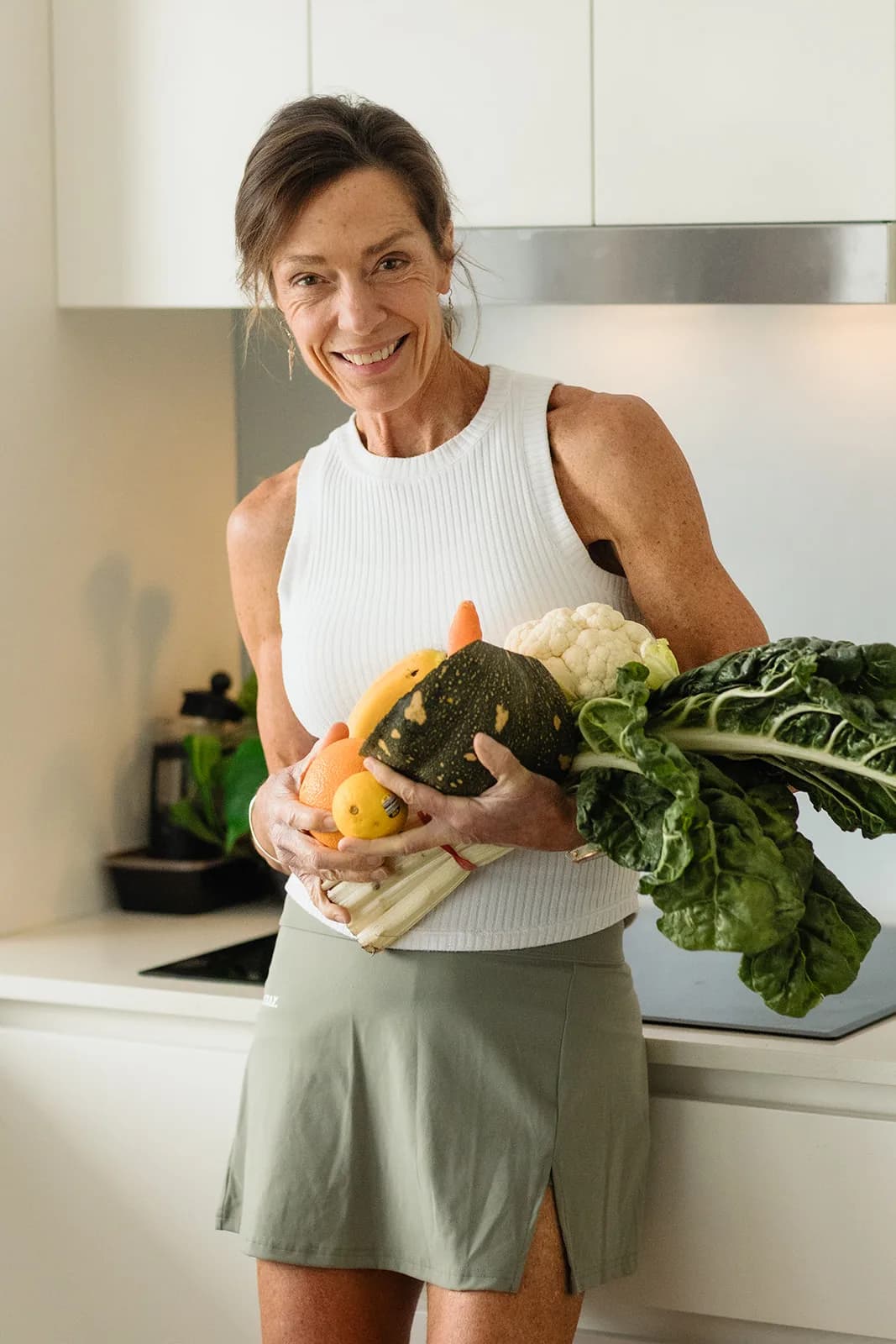
Eat calcium-rich foods as part of a general healthy diet which includes fresh fruit, vegetables and whole grains.
Absorb enough vitamin D.
Avoid smoking and limit alcohol consumption.
Do regular weight-bearing and strength-training activities.
An interesting finding by Professor Robin Daly from the Flinders University in Adelaide shared that doing 2 minutes of jarring type exercise will help to keep our bones ‘strong’
This piqued my interest…
HOW can women do this?
Afterall I thought to myself, jumping sometimes isn’t on the agenda for women who have a weak pelvic floor and incontinence or maybe suffering a knee injury. And what about our upper body? Spine health? How can we do jarring type ‘safe’ exercises to support these bones? I had learned that day that our wrists and hips were the first areas to show weakening so I wanted to incorporate all our bones, not just our lower body.
These questions led me on a journey of discovery and I’ve been teaching women my techniques ever since.
Here is what I want you to know:
Yes it is possible to train your bones at whatever your level of fitness, strength, age and pre-existing conditions you may suffer from
Yes it sometimes requires a personalised program designed by a health and fitness professional (such as myself) to ensure that you are working at a level that is safe for your current health and fitness level
Yes it is vital that you start now, in your 40’s and 50’s as your hormone levels are changing and increasing your bone density now will support you down the track
Yes it is the balance of strength, weight bearing and balance exercises that will give you maximum results.
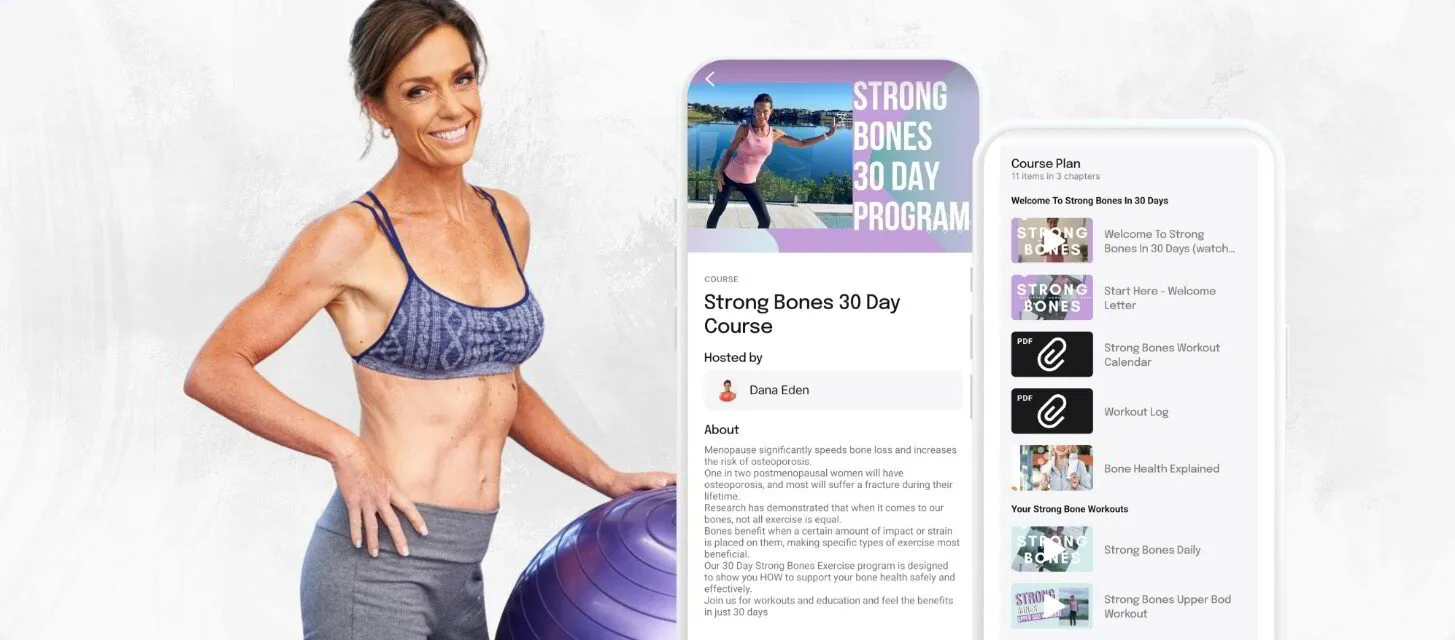
If you want to know more about the ‘exercises’ to help support your bone health, consider my Strong Bones in 30 Days Program which shows you the workouts and education to support you and your bones.
Best of all, you can start anytime in the privacy of your own home.
You may be surprised to learn that if you are suffering from osteopenia and osteoporosis, not all exercises are safe.
Some activities you should avoid are activities that involve:
Loaded forward flexion of the spine such as abdominal sit-ups and toe touches.
exercises that increase the risk of falling.
Sudden, forceful movement, unless introduced gradually as part of a progressive program
A forceful twisting motion, such as a golf swing, or tennis unless the person is accustomed to such movements.
I want to remind all of us that as we age our health is our wealth and without it, we have nothing.
Ultimately this means we have to be the lady boss of our own health. Educate yourself on health matters that are common to you as you age, (such as our bone health, incontinence, heart disease, diabetes, cholesterol and Alzheimer's disease) learn what is working, the technologies currently available, the tools and strategies and then demand this for yourself.
You are so worth the time and effort to create a life that is full of energy, vitality, health and a skip in your step…
Your body says ‘thank you’ for caring
Dana